Roller Multi-V Die for Reduced-Marking and Heavy Plate Bending
February 16, 2025
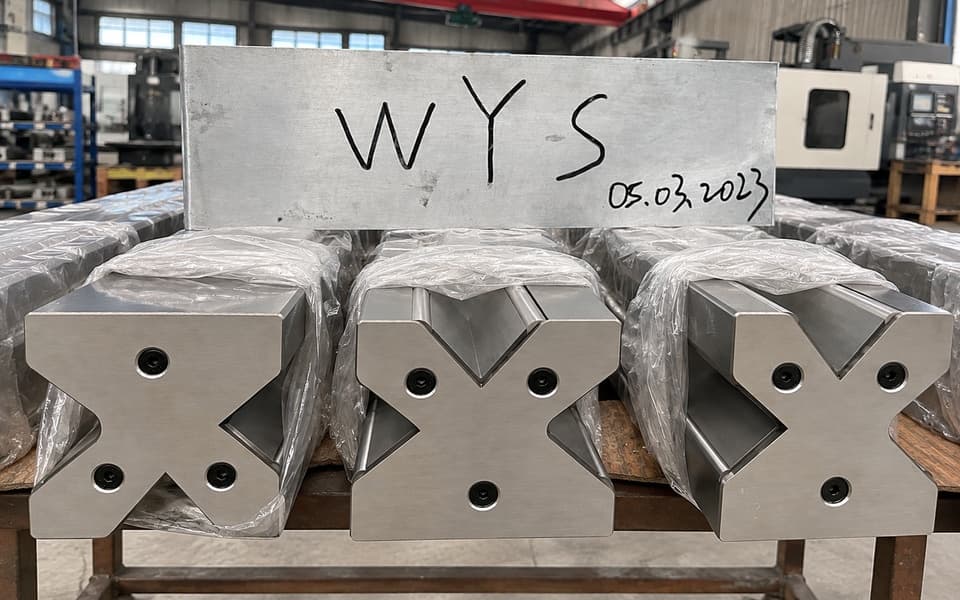
Roller Multi-V Die for Reduced-Marking and Heavy Plate Bending
Conventional press brake bending creates sliding contact between the sheet and the shoulders of the lower die. This contact can leave scratches or bending marks on the sheet surface and can also increase tooling wear, especially when bending thicker plate.
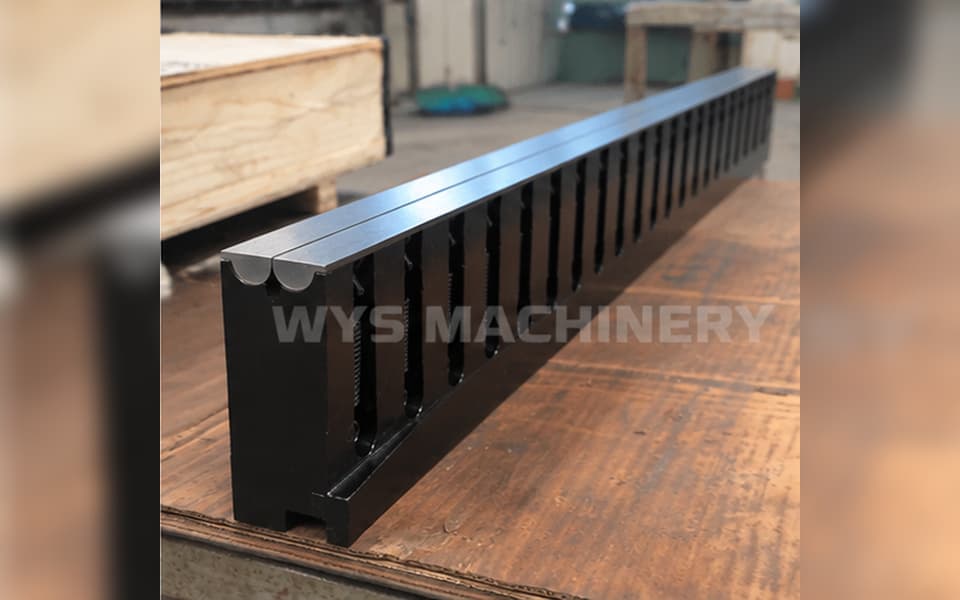
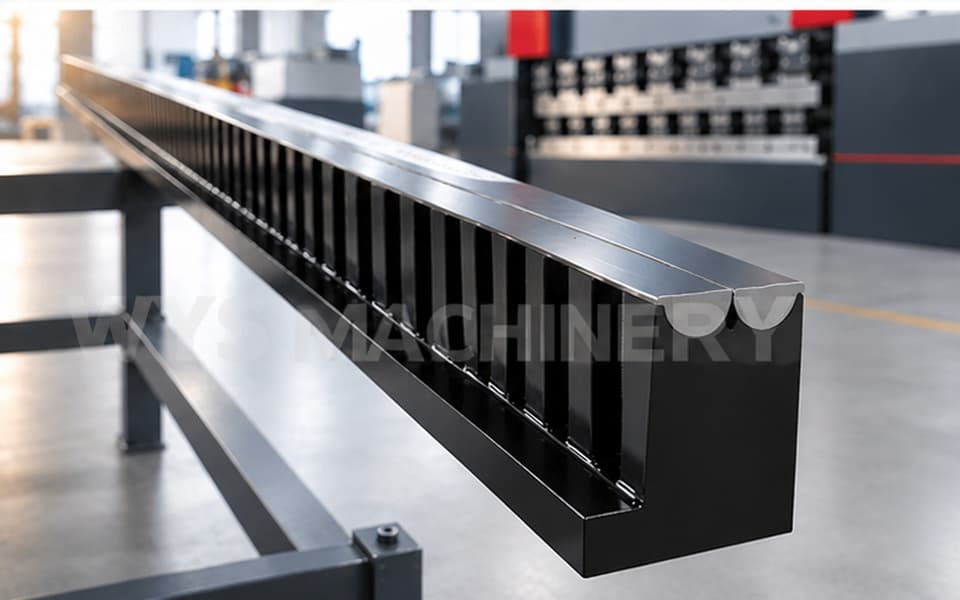
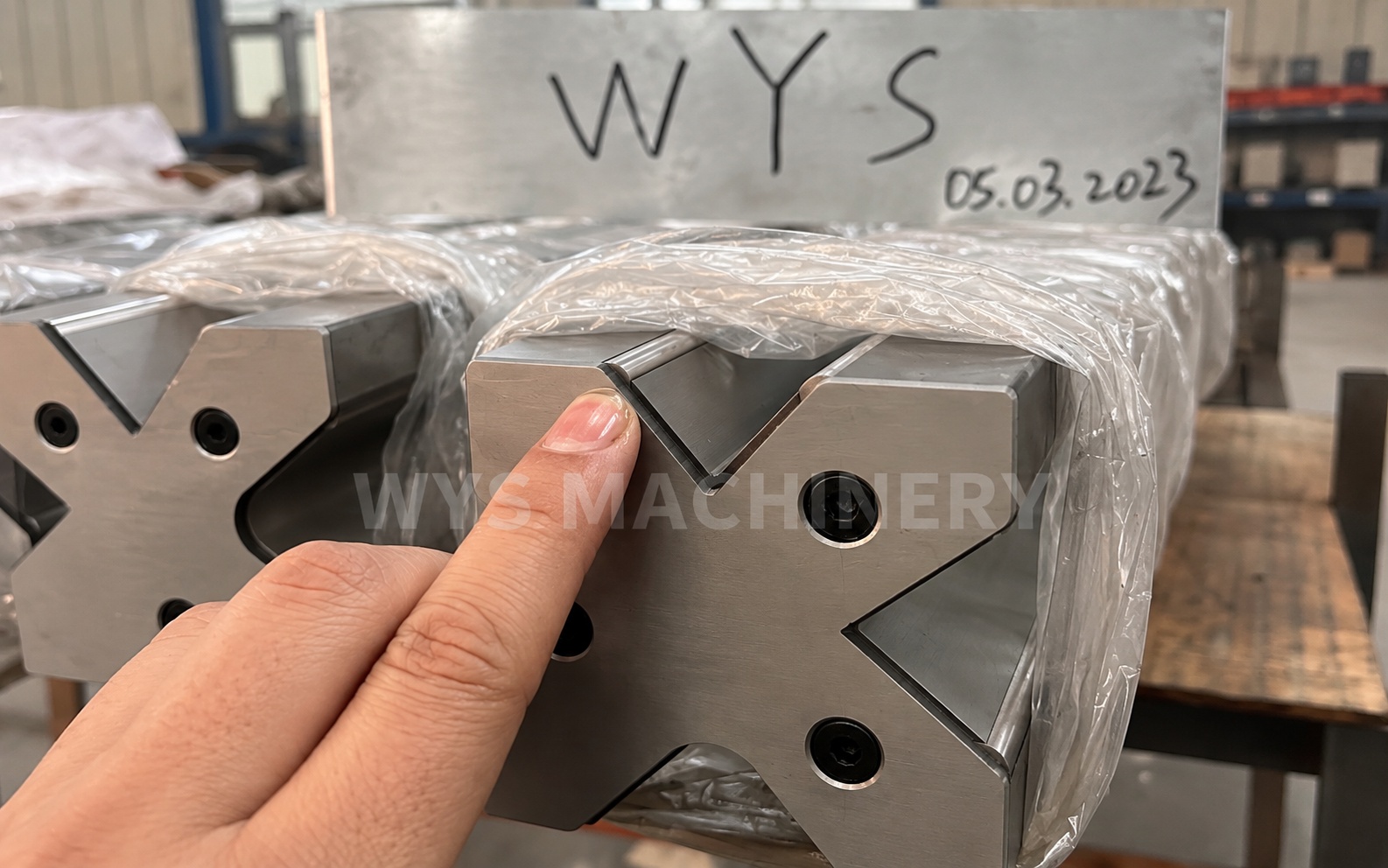
WYS Machinery developed this roller multi-V press brake die with rollers positioned at the opening of each V-groove. The rollers provide rolling contact as the sheet moves into the V during bending, helping reduce sliding friction between the workpiece and the die.
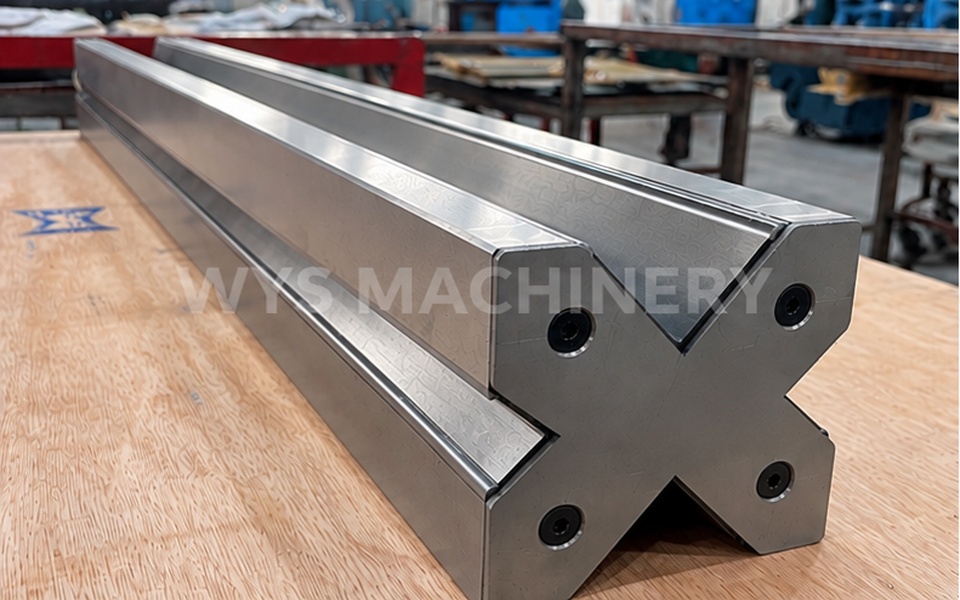
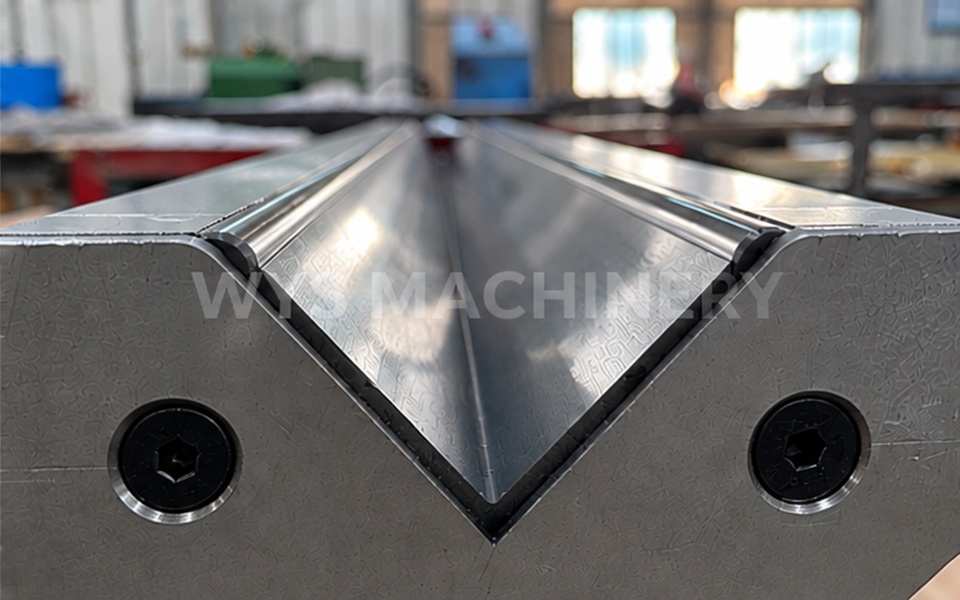
How Do the Rollers Reduce Sheet Scratches?
During conventional V-die bending, the sheet moves across the die shoulders as it is forced into the V-opening. Friction at these contact points can create visible surface marks.
With this roller structure, the rollers rotate as the sheet moves during bending. This reduces sliding contact at the die shoulders and therefore helps minimize scratches and surface damage.
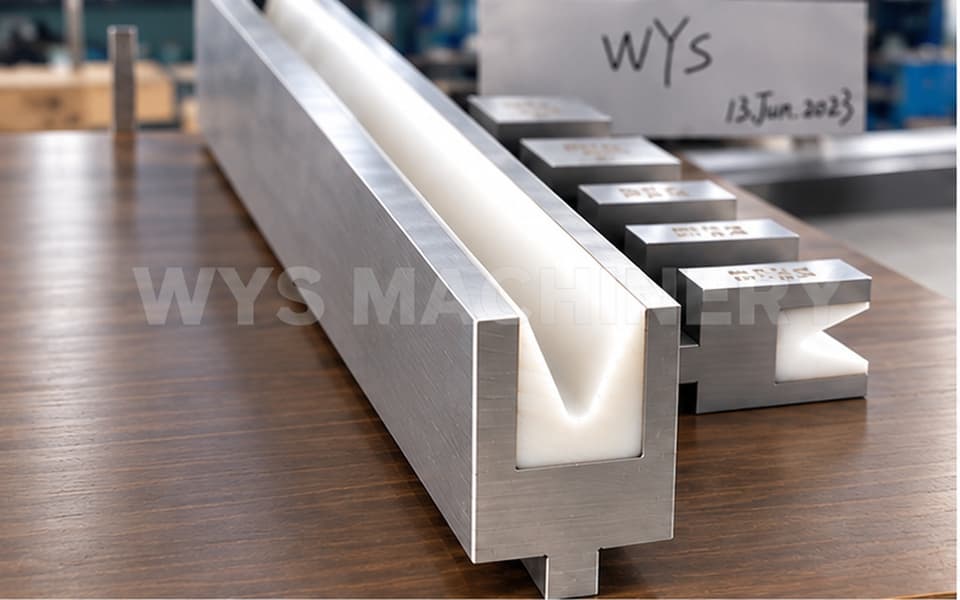
The purpose of this design is reduced-marking bending rather than completely mark-free bending. For applications requiring a higher level of surface protection, other solutions such as Rolla-V tooling or polyurethane-based tooling may be more appropriate.
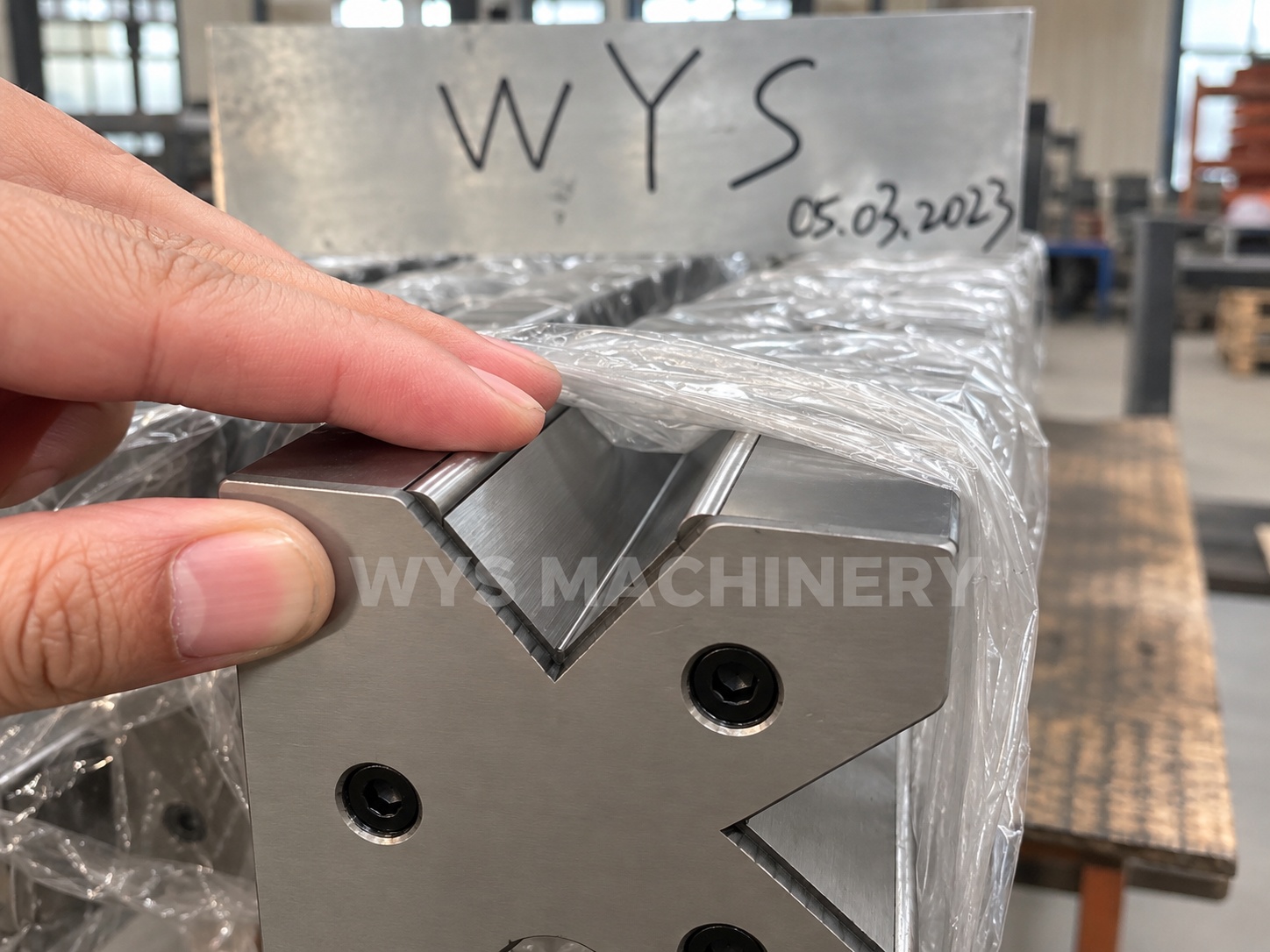
Why Use Roller Dies for Heavy Plate Bending?
The roller structure also provides an advantage when bending thicker plate.
Heavy plate creates higher contact loads between the workpiece and the lower die. Repeated sliding contact under these loads can accelerate wear on the die shoulders.
By replacing part of this sliding action with rolling contact, the roller design helps reduce friction and wear at the contact area, protecting the die and contributing to longer tooling service life.
Multi-V Design for Flexible Bending
This tooling combines the roller structure with a Multi-V lower die, providing several V-openings in a single die body.
Different V-openings can be selected according to the sheet thickness, bending requirements and required forming conditions, allowing one tooling structure to cover multiple bending applications.
Roller Multi-V Die vs. Rolla-V Tool
Although both designs use moving contact elements to reduce friction during bending, they serve somewhat different requirements.
A roller multi-V die is a practical and economical solution for reducing scratches and die wear, particularly for general-purpose and heavy plate bending.
A Rolla-V tool is better suited to applications where minimizing visible bending marks is a primary requirement.
The appropriate solution should therefore be selected according to the sheet material, thickness, required surface quality and production requirements.
Custom Roller Press Brake Dies
The tooling shown here represents one roller Multi-V configuration. WYS Machinery can customize the V-opening, number of V-grooves, die height, width, roller structure and mounting interface according to the customer's workpiece, material thickness and press brake requirements.
For special bending applications, customers can provide their workpiece drawings and bending requirements, and our engineering team can recommend a suitable tooling configuration.